
 Risk Capacity
 Wealth Management
 Outsourced CIO
 Retirement Plans
 Institutional
 Financial
  Open an Account
 IFA App

 Articles
 Charts
 Investor Education ▾
 Fund
Fund
 Store
Store

 Taxes
Taxes Back-testing Disclosures
 Glossary
 Form CRS
What America's 401(k) Savers are Quietly Getting Right
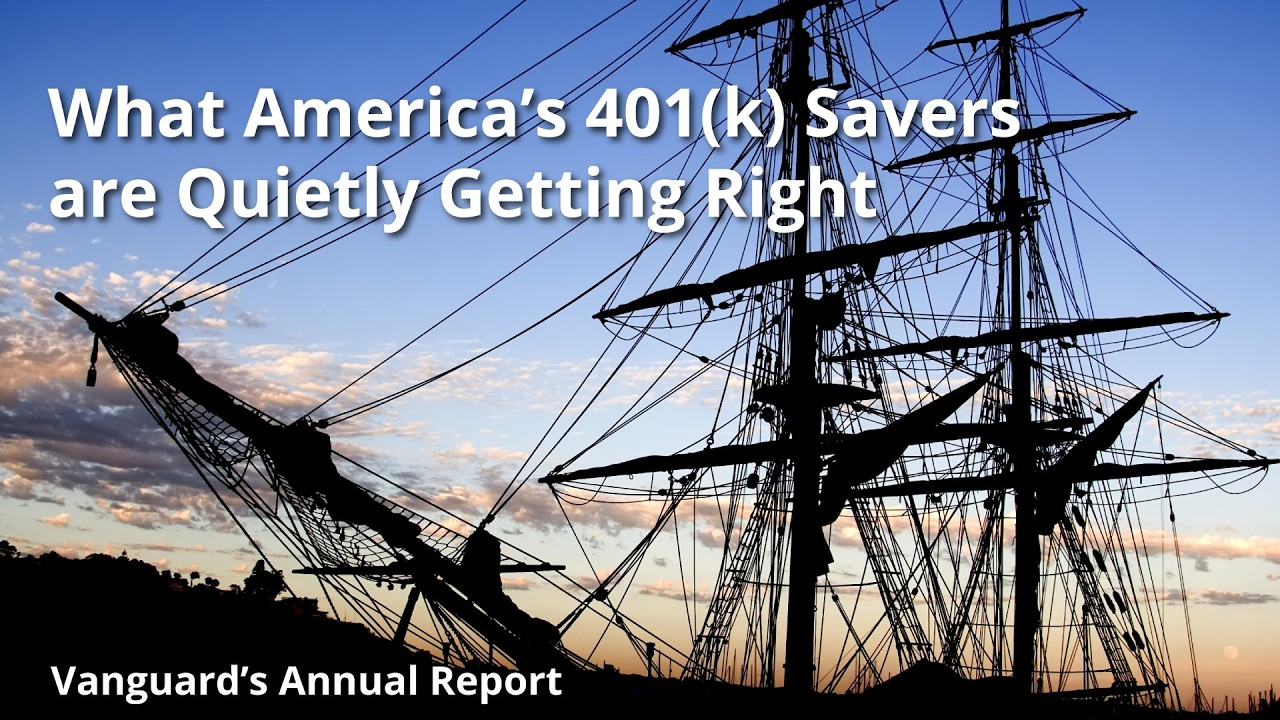

Generally, the investors who performed the best in their 401(k) during any given year had one common behavior: they did not make changes to their portfolio.
That's not a guess. Vanguard publishes an annual report on how millions of real 401(k) savers actually behave — not how they think they invest, but what they actually do. The 2025 edition makes for particularly interesting reading.
88% of participants made zero trades in 2024. Not one portfolio change. All year.
Now, you might think that sounds passive — even neglectful. But the data tells a very different story.
The participants who traded most actively also tended to make bigger bets — going all-in on stocks, or avoiding them entirely. And when you look at five-year return data, the differences were notable. The gap between the best and worst performers has been as much as 11 percentage points per year. That's not a minor variation. That's the difference between building wealth and falling behind.
The participants who didn't tinker? Much tighter outcomes. Much more consistent.
There's another shift in the data worth highlighting. Back in 2005, only 9% of participants had their savings in a portfolio built and rebalanced for them — one they didn't have to manage themselves. By 2024, that number had climbed to 67%.
The biggest reason? Target-date funds.
Here's how they work: you pick a retirement year, the fund does the rest. It holds an age-appropriate mix of stocks and bonds, and gradually shifts to lower risk as you get closer to retirement. No decisions required. And the discipline that produced? Striking. In 2024, 84% of participants used them when they were offered — and only 1% made any trades at all. That five-year return spread — the gap between the best and worst outcomes — was just 4.3 percentage points. Compare that to 11 percentage points for self-directed investors making their own calls.
One more finding worth highlighting. Plans that automatically enroll employees had a 94% participation rate. Voluntary plans? 64%. And among employees with ten or more years of service, those in automatic enrollment plans had median account balances roughly 60% higher.
The pattern across all of this is consistent. When structure replaces impulse — when the decision is made in advance rather than in the moment — outcomes improve. Not because people are careless. But because markets are unpredictable, emotions are powerful, and the urge to react when things get volatile is hard to resist.
The same principles apply whether you're managing a 401(k), an IRA, or a Roth. Diversification, discipline, and a structure that keeps emotion out of the equation — that's the foundation of evidence-based investing.
These are historical figures, and past results don't guarantee future outcomes — but the behavioral pattern they reveal is consistent with decades of academic research.
Auto-enrollment and target-date funds are a meaningful step in the right direction. They help reduce the likelihood of certain common investor errors. But they're a floor, not a ceiling. They don't account for your tax situation, your income, your timeline, or what you actually want retirement to look like. That's where a fiduciary advisor can add value — not by picking better stocks, but by building a strategy around your life, not just your age.
Sources
Vanguard, How America Saves 2025 (Vanguard Group, 2025)
Disclosures
Elena Vega is a virtual presenter and is not a financial advisor or employee of Index Fund Advisors. All investing involves risk, including possible loss of principal. Past performance does not guarantee future results. The data referenced in this video is drawn from Vanguard's proprietary recordkeeping platform and reflects the historical experience of participants in plans administered by Vanguard. It does not represent the performance of any Index Fund Advisors client portfolio. This content is educational in nature and should not be considered personalized investment advice. Reference to target-date funds or any other investment structure does not constitute an endorsement of any specific product, fund, or fund provider. Consult a qualified fiduciary financial advisor before making any investment decisions.










 Home
Home 888-643-3133
 Contact Us
 Newsletter Subscribe
 eMoney
 IFA Apps
 Index Funds Book on Kindle
 Index Funds Audiobook
 Careers
 Facebook
 X
X LinkedIn
 Instagram
 Youtube
 Terms
Terms Index Descriptions