A Documentary Analysis: Evidence-Based Investing, the Chicago School Revolution, and the Implications for Modern Investors
Introduction and Production Context
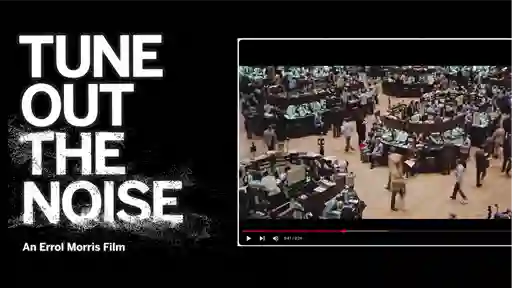
In 2024, Dimensional Fund Advisors (DFA) — the Austin, Texas-based investment management firm managing over $777 billion in assets globally — commissioned Academy Award-winning documentary filmmaker Errol Morris to direct a film about the intellectual origins of modern index investing. The result, Tune Out the Noise, debuted on YouTube in March 2025 and has since become one of the most widely circulated works of financial documentary filmmaking in the streaming era.
The film's release was announced via Business Wire and positioned explicitly as a chronicle of how a small group of academic iconoclasts at the University of Chicago in the 1960s upended conventional Wall Street wisdom and, in doing so, established the empirical foundations for one of the most influencial revolutions in modern capital market theory. Produced by Julie Bilson Ahlberg and Robert Fernandez, with cinematography by Igor Martinović and score by BAFTA Award-winning composer Paul Leonard-Morgan, the film is technically accomplished and benefits from the full weight of Morris's storied career as a chronicler of ideas and institutions.
It should be noted at the outset that the film occupies an unusual position in documentary practice: it was financed by the very institution it profiles, Dimensional Fund Advisors, which under SEC marketing rules technically classifies the work as investment advertising. Morris and DFA have been transparent about this relationship, and the film's credits carry explicit investment disclosures. This dual identity — as both serious documentary and branded financial communication — is itself an intellectually interesting feature of Tune Out the Noise, and will be discussed in the section on critical reception.
For viewers affiliated with Index Fund Advisors, Inc. (IFA) — itself a passionate champion of DFA's investment philosophy and a featured participant in the film through IFA founder Mark Hebner — the documentary carries special resonance. IFA's entire investment thesis, educational apparatus, and client advisory approach reflects the same intellectual tradition that Tune Out the Noise documents and celebrates. The film can thus be viewed not only as a piece of financial education but as an origin story for the evidence-based investing movement that IFA has spent decades promulgating.
Cinematic Approach: Errol Morris and the Interrotron Method
Errol Morris is among the most celebrated documentary filmmakers working today. His films include The Thin Blue Line (1988), A Brief History of Time (1991), The Fog of War (2003, Academy Award for Best Documentary Feature), and Standard Operating Procedure (2008, Silver Bear at the Berlin International Film Festival). His work is archived permanently in the collection of the Museum of Modern Art. Roger Ebert called Morris's debut film, Gates of Heaven, one of the ten best films ever made.
Morris's signature method involves the use of the Interrotron, a device he invented that allows interview subjects to look simultaneously into the camera and into Morris's eyes via a two-way mirror. This creates a uniquely direct visual intimacy in which subjects appear to address the viewer head-on — a technique that dissolves the usual documentary awkwardness of subjects staring off-camera. In Tune Out the Noise, this approach lends the interviews an unusual confessional quality, as though each figure is delivering testimony directly to posterity.
The film's production values are deliberately cinematic rather than journalistic. Paul Leonard-Morgan's score fuses orchestral textures with electronic elements — evoking both the intellectual excitement of academic discovery and the kinetic energy of financial markets — and the film deploys archival footage, animated sequences, and vintage commercial and newsreel imagery to illustrate concepts that would be visually inert as talking heads alone. The director of photography, Igor Martinović, frames his subjects with a painterly formality that distinguishes the film from standard corporate documentary productions.
The total runtime places Tune Out the Noise squarely in the tradition of serious feature-length documentary filmmaking, and Morris has publicly described the work as consistent with his broader preoccupation with challenging received wisdom: "The evolution of modern finance is a story of innovation, disruption, and resilience. It's about the power of ideas, the courage to question convention, and the enduring impact of turning knowledge into action."
Intellectual Framework: The Chicago School Revolution
The intellectual spine of Tune Out the Noise is the Efficient Market Hypothesis (EMH) and its implications for investment practice. The film traces the emergence of this hypothesis from the institutional environment of the University of Chicago's Graduate School of Business in the late 1950s and 1960s, a period when the application of statistical computing to financial data was making rigorous empirical analysis of securities markets possible for the first time.
The Efficient Market Hypothesis
The EMH, most rigorously articulated by Eugene Fama in his landmark 1970 paper "Efficient Capital Markets: A Review of Empirical Work," holds that asset prices in liquid markets at all times fully reflect all available information. In its strong form, this implies that no investor — however well-informed, analytically skilled, or computationally equipped — can systematically achieve returns in excess of the market without bearing proportionate additional risk. In its weaker formulations, the hypothesis suggests at minimum that price patterns are not reliably exploitable for excess returns once transaction costs are accounted for.
One practical implication often discussed in the literature poses a significant challent to the active management industry's business model: if markets are efficient, then stock-picking and market-timing strategies cannot, net of fees, systematically outperform a passive strategy that simply holds a broad market portfolio. The empirical evidence assembled by Fama and his colleagues — and subsequently extended and refined by dozens of researchers over six decades — has generally supported this conclusion aross many studies.
The Factor Revolution
The film also traces the subsequent development of factor-based investing, particularly through the landmark 1992 Fama-French three-factor model, which identified size (small-cap stocks) and value (high book-to-market stocks) as systematic sources of return premium above and beyond the market factor. This work had profound practical implications: it suggested that while active stock selection was futile, investors could systematically tilt their portfolios toward dimensions of expected return that the evidence suggested were persistent, pervasive across markets, robust to alternative specifications, and grounded in rational economic explanations.
Dimensional Fund Advisors was specifically designed to translate this academic research into live investment products. The film traces this translation process from theoretical conception to practical implementation, emphasizing the unique institutional relationship between DFA and the University of Chicago's finance faculty — a relationship that at various points involved active research collaboration, board membership, and formal consulting arrangements with Fama, French, Merton, and others.
The Center for Research in Security Prices
A crucial institutional actor in the film's narrative is the Center for Research in Security Prices (CRSP) at the University of Chicago, whose comprehensive historical database of U.S. securities returns provided the raw material for much of the foundational empirical work. Roger Ibbotson and Rex Sinquefield's 1977 study, Stocks, Bonds, Bills, and Inflation, which transformed CRSP data into the most widely cited long-run asset class return dataset in financial history, is presented as a pivotal moment of knowledge democratization — making the case for equities as the superior long-run asset class in a format accessible to practitioners as well as academics.
Cast Analysis: Portraits of a Revolution
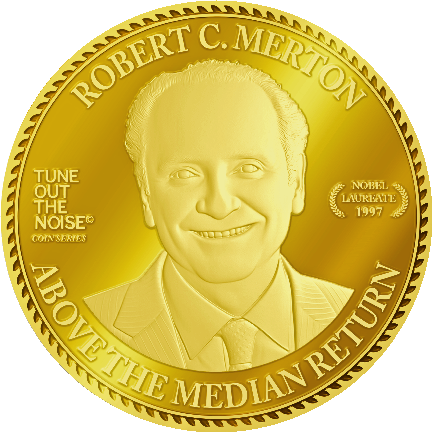
Robert C. Merton
1997 Nobel Laureate in Economics; MIT Sloan School
Robert C. Merton purchased his first stock — General Motors — at the age of ten, a biographical detail that the film deploys to considerable narrative effect. The son of the eminent sociologist Robert K. Merton, he went on to develop dynamic portfolio theory and to make foundational contributions to the mathematics of derivative pricing, work for which he shared the 1997 Nobel with Scholes. His career exemplifies the film's central thesis: that finance, rigorously practiced, is a branch of applied science with profound implications for human welfare.
In his segments, Merton is thoughtful and historically contextualized, drawing connections between the pure theoretical work of the 1960s and 1970s and its practical manifestations in the global financial system. He also addresses the complexity and limitations of financial models — a theme that gives the documentary intellectual honesty by acknowledging that the translation from academic theory to market practice is never frictionless.
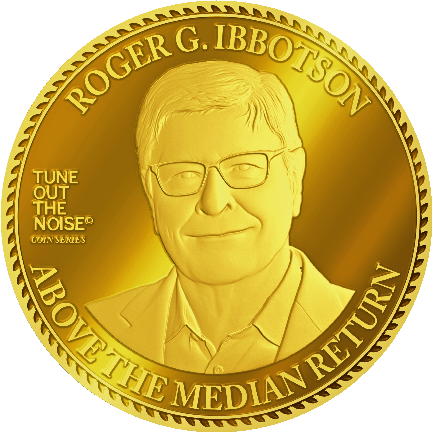
Roger Ibbotson
Professor Emeritus, Yale School of Management
Roger Ibbotson's contribution to the film anchors its treatment of long-run market returns and the power of compounding. The documentary uses his and Sinquefield's famous calculation — that a dollar invested in U.S. equities in 1926 would have grown to over $14,000 by 2021 — as a visual and rhetorical centerpiece for the argument that patient, low-cost equity investing is the most powerful wealth-creation tool available to ordinary investors.
The son of a heating and cooling contractor who knew he was not mechanically inclined, Ibbotson pursued economics at the University of Chicago and became one of the most cited applied researchers in finance. His tone in the film is warm and pedagogical — he is clearly comfortable communicating complex ideas to non-specialist audiences — and his segments serve an important function in making the documentary accessible to viewers without technical financial backgrounds.
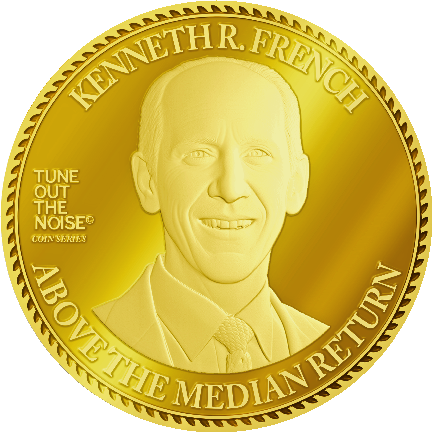
Kenneth French
Roth Family Distinguished Professor, Dartmouth Tuck School
Ken French is perhaps best known to the quantitative finance community as the co-creator, with Eugene Fama, of the three-factor model and the multi-factor extensions that followed. As a PhD student at the University of Rochester in the early 1980s, French was struck by how little the names of most mutual funds told investors about their actual investment strategies — an observation that foreshadowed the systematic, factor-based fund characterization that he and Fama would later make possible.
In the film, French speaks with quiet precision about the empirical process underlying his research and the intellectual satisfaction of finding evidence that systematically challenged the active management industry's claims. He also discusses his consulting relationship with Dimensional and the unusual model of academic-practitioner collaboration that DFA pioneered — a model in which the firm was designed from the outset to serve as a living laboratory for academic finance.
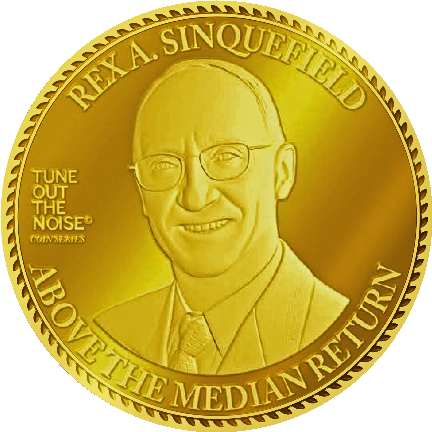
Rex Sinquefield
Founder, Dimensional Fund Advisors
A ruptured aorta took his dad's life in 1950, when Rex Sinquefield was 5 years old. He grew up in a St. Louis orphanage and was drafted into the military before landing in the legendary Merton Miller's class at the University of Chicago, where he first learned about efficient markets. Sinquefield and fellow UChicago PhD student David Booth would go on to found Dimensional in 1981.
Eugene Fama
American Economist and Nobel Laureate
Gene Fama, "a poor kid from Malden," a working-class town in eastern Massachusetts, at first majored in French when he enrolled at Tufts, his local university, in the 1950s. But he soon discovered economics and fell in love with it. Fama, a 2013 Nobel laureate, is regarded as the father of the efficient market hypothesis.
Paul Samuelson
American Economist and Nobel Laureate
Paul Samuelson was an American economist who was awarded the Nobel Prize in Economic Sciences in 1970 for his fundamental contributions to nearly all branches of economic theory. Samuelson was educated at the University of Chicago (B.A., 1935) and at Harvard University (Ph.D., 1941). He became a professor of economics at the Massachusetts Institute of Technology (MIT) in 1940. He also served as an economic adviser to the United States government.
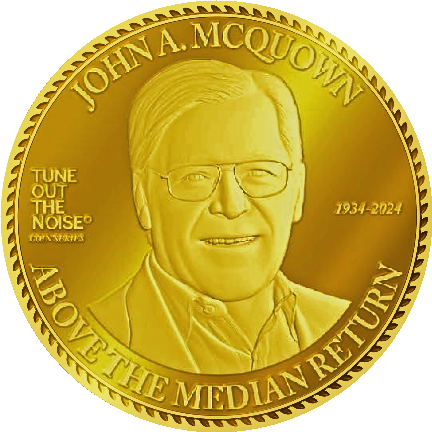
John 'Mac' McQuown
Founding Board Member, Dimensional Fund Advisors
Mac McQuown occupies a crucial but sometimes underappreciated place in the history of index investing. A farm boy from Sandwich, Illinois, he brought a quantitative sensibility formed in agricultural data analysis to Wells Fargo Bank in 1964, where he was given a position — created specifically for him — to apply computer analysis to financial questions. A decade later, he and David Booth created one of the first institutional S&P 500 index funds. When Booth subsequently launched Dimensional, McQuown became a founding board member.
The film positions McQuown as the engineering intelligence behind the early practical implementation of index fund theory — the person who translated abstract academic insights about market efficiency into actual investment products. His segments convey both the technical excitement of the era and a certain institutional satisfaction in having been at the center of a revolution that Wall Street initially dismissed as naive.
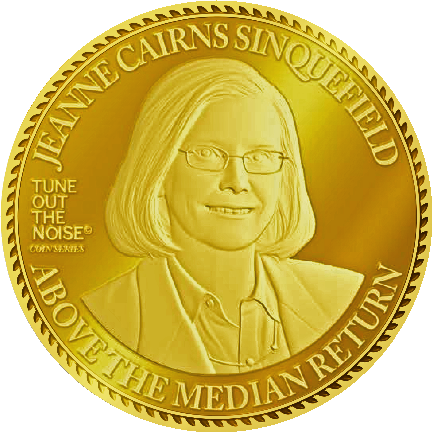
Jeanne Sinquefield
Former EVP and Head of Trading, Dimensional Fund Advisors
Jeanne Sinquefield holds the distinction of being one of relatively few women in the documentary, and her role in building Dimensional's operational infrastructure is given meaningful screen time. Holder of both a PhD and an MBA from the University of Chicago, she was designing options contracts for the Chicago Board of Trade when her husband Rex asked her to help manage trading at the newly formed Dimensional. She accepted, and proceeded to train an entire generation of the firm's traders and portfolio managers.
The film's treatment of Jeanne Sinquefield has attracted some critical commentary (discussed in Section VI), but her professional accomplishments are presented seriously and her intellectual contributions to the firm's operational DNA are clearly acknowledged. She represents an important but often unrecognized dimension of the Dimensional story: that the firm's trading excellence, not just its theoretical architecture, was a major source of competitive advantage for its clients.

Gerard O'Reilly
Co-CEO and Co-CIO, Dimensional Fund Advisors
Gerard O'Reilly's biography is among the most striking in the entire film. An Irish native, he enrolled at Trinity College Dublin at sixteen to study theoretical physics. He subsequently completed a master's degree in high-performance computing and a PhD in aeronautics from Caltech in 2004. He joined Dimensional as a researcher and eventually rose to become both Co-Chief Executive Officer and Co-Chief Investment Officer of one of the world's largest investment management firms.
O'Reilly's presence in the film serves a dual narrative function: he represents both the global reach of the Chicago intellectual tradition (extended now to Trinity College and Caltech) and the ongoing institutionalization of research-driven investment management. His scientific background — aeronautics and high-performance computing — underscores the film's persistent theme that rigorous quantitative discipline, not intuition or charm, is what distinguishes the Dimensional approach.

Savina Rizova
Co-CIO and Global Head of Research, Dimensional Fund Advisors
Savina Rizova was born in Bulgaria under communist rule, came to Dartmouth College to study finance, and became a research assistant to Professor Ken French. She rose to become Co-Chief Investment Officer and Global Head of Research at Dimensional and has been named to Barron's "100 Most Influential Women in US Finance" in 2022, 2023, and 2024.
Her segments in the film speak to the international reach of evidence-based investing and the ability of rigorous finance to function as a meritocratic institution that draws talent from unexpected places. Rizova's trajectory — from communist Bulgaria to the inner sanctum of one of the world's most sophisticated investment firms — is one of the documentary's most quietly compelling stories.

Dan Wheeler
Head of Financial Advisor Services, Dimensional Fund Advisors
Dan Wheeler founded Dimensional Fund Advisors Financial Advisor Services group, and has been instrumental in bringing modern portfolio theory to the community of fee-only financial advisors. Throughout his career, Dan has helped build the advisor community and change investment advice in retail markets. Prior to Dimensional, Dan worked at Arthur Anderson & Co., was the controller of Triad International Marketing and owned a fee-only investment advisory firm.

David Butler
Co-CEO, Dimensional Fund Advisors
David Butler's story is the most explicitly personal cautionary tale in the film. Following a decorated college basketball career at UC Berkeley and a brief professional career, Butler joined a major Wall Street firm where he experienced firsthand the conflict of interest inherent in commission-driven brokerage. He lost a significant portion of his net worth on Boston Chicken stock recommended by his broker — a recommendation that served the broker's interests, not his.
This experience, Butler explains, was the "aha moment" that led him to embrace evidence-based, client-centered financial advice. As Co-CEO of Dimensional, he now advocates for what he calls "holistic wealth management" — an approach that integrates the empirical insights of the Chicago School with an explicit fiduciary commitment to client welfare. Butler's populist directness and athletic background make him one of the film's most accessible and rhetorically effective communicators.

Mark Hebner
Founder and CEO, Index Fund Advisors, Inc.
Mark Hebner's appearance in Tune Out the Noise is particularly meaningful for IFA clients and affiliates, as he represents the living connection between the academic revolution documented in the film and the real-world experience of individual investors. Hebner's origin story is itself a parable of the kind the film seeks to tell: a highly successful pharmaceutical entrepreneur who retired at thirty-two, was persuaded by a cold-calling broker to invest in individual municipal bonds and stocks, and — measured against the passive portfolio he could have held — missed out on millions in potential gains.
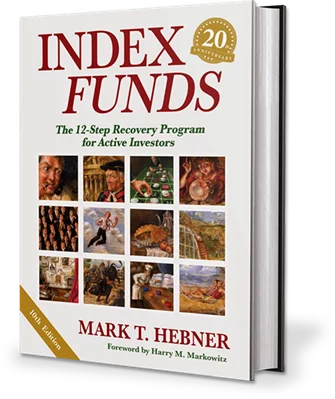
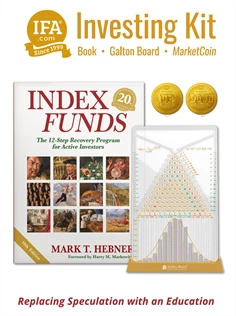
Rather than absorbing this lesson privately, Hebner turned it into a vocation. He created Index Fund Advisors as one of the first web-based registered investment advisory firms, with an explicit mandate to educate investors about the evidence for passive investing and to provide them with access to the same institutional-quality tools available to the largest pension funds and endowments. His book, Index Funds: The 12-Step Recovery Program for Active Investors, has become a canonical text in the evidence-based investing movement.
In the film, Hebner speaks with the conviction of a convert who has become an apostle — someone whose personal financial experience gave him not just an intellectual but a visceral understanding of the costs that active management imposes on ordinary investors. His inclusion in the documentary, alongside Nobel laureates and the founders of trillion-dollar institutions, reflects the important role that practitioner-educators play in translating academic insights into actionable guidance for individual investors.

Norm Mindel
Co-Founder, Forum Financial Management
Norm Mindel is a distinguished financial advisor, attorney, CPA, CFP, author, and public speaker who serves in the documentary as a practitioner voice for the advisory community that has embraced DFA's philosophy. A co-founder of Forum Financial Management, Mindel describes the transformative professional experience of encountering Dimensional's research-based approach and the effect it had on both his practice and his clients' outcomes.
Mindel's segments reinforce a key theme of the film: that the Chicago School revolution was not merely an academic exercise but has been transmitted, through advisors like himself and Hebner, into genuine improvements in the financial lives of ordinary people. His diverse professional qualifications — spanning law, accounting, and financial planning — also speak to the interdisciplinary nature of truly comprehensive wealth management.
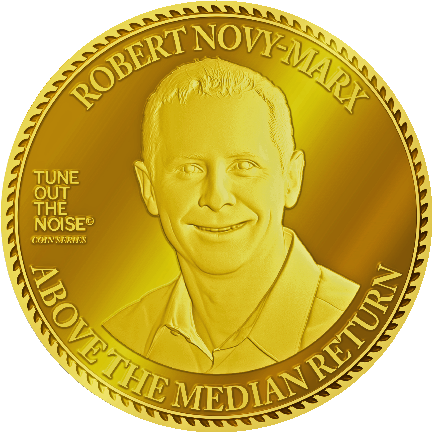
Robert Novy-Marx
Distinguished Professor of Business Administration, University of Rochester Simon Business School
Robert Novy-Marx is the Lori and Alan S. Zekelman Distinguished Professor of Finance at the Simon Business School in the University of Rochester. His research focuses on asset pricing, both theoretical and empirical, as well as industrial organization, public finance, and real estate. His seminal work on the government pensions crisis established him as a leading national voice on the issue, while his work on profitability is foundational for asset managers.
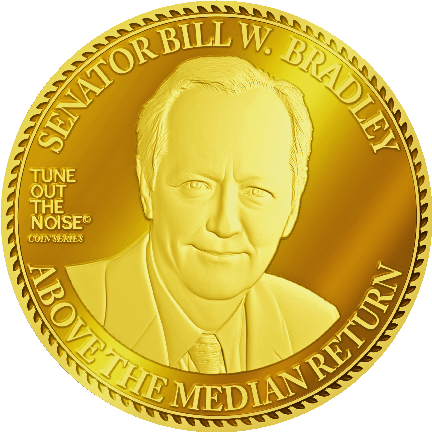
Senator Bill Bradley
Former U.S. Senator; Consultant, Dimensional Fund Advisors
Bill Bradley's inclusion in the documentary is initially surprising but ultimately serves an important rhetorical function. A two-time NBA champion with the New York Knicks, Rhodes Scholar, and three-term U.S. Senator from New Jersey, Bradley brings a perspective on wealth, public policy, and financial literacy that transcends the insider culture of the investment management industry.
Bradley's most striking contribution to the film comes in his reflection on the human stakes of sound financial advice: a financial advisor once told him that not many people have access to something as intimate as people's dreams, and that is precisely what financial advisors do hold. The lesson, Bradley explains, is that whether someone achieves their dreams — a vacation home, a college education for their children, a beautiful painting — depends critically on how their savings are invested. This framing elevates the film's argument from a technical debate about investment methodology to a moral claim about the obligations of the financial services industry.

Errol Morris
Award Winning Director
Errol Morris is the Director of Tune Out the Noise. His films have won many awards, including an Oscar for The Fog of War, the Grand Jury Prize at the Sundance Film Festival for A Brief History of Time, the Silver Bear at the Berlin International Film Festival for Standard Operating Procedure, and the Edgar from the Mystery Writers of America for The Thin Blue Line. His films have been honored by the National Society of Film Critics and the National Board of Review.
Thematic Analysis
Science Versus Speculation
The organizing thematic tension of Tune Out the Noise is the conflict between two competing models of financial knowledge: the empirical-scientific model championed by the Chicago School, and the intuitive-speculative model that has historically dominated Wall Street practice. The film repeatedly returns to this opposition, framing the Chicago researchers as Galilean figures challenging a geocentric establishment — armed with data and computation in place of tradition and salesmanship.
This framing is effective rhetorically but somewhat reductive intellectually. The film does not engage seriously with the extensive behavioral finance literature that has documented systematic departures from the strict rationality assumptions underlying the EMH, nor does it acknowledge the nuanced debate between Fama and Robert Shiller (who shared the 2013 Nobel with Fama) about whether markets are truly efficient or merely hard to beat. For a general audience, however, the binary framing serves the important purpose of making the practical implications of the research legible and memorable.
The Power of Compound Returns
Another central theme of the documentary is the mathematics of long-run compounding and the devastating effect of fees, taxes, and transaction costs on wealth accumulation. Using Roger Ibbotson's famous long-run return data as a visual anchor, the film illustrates how small differences in annual returns compound over decades into enormous differences in terminal wealth. This is not merely a mathematical observation — it is a moral indictment of any investment strategy that imposes unnecessary costs on investors.
The practical import is unambiguous: an investor who pays an additional 1% per year in fees for active management — a modest estimate of the true cost differential — could, over long investment horizons, result in materially lower accumulated weath than an investor in a comparable passive strategy. Multiplied across millions of investors and trillions of dollars in assets, this represents an enormous and largely invisible redistribution of wealth from investors to the financial services industry.
Institutional Trust and the Fiduciary Standard
A third important theme concerns the relationship between investors and the financial advisors who serve them. The film is quietly but persistently concerned with the misalignment of interests that arises when financial intermediaries are compensated through commissions on products they recommend — an arrangement that creates powerful incentives to sell, rather than to advise. Several cast members, most explicitly David Butler and Bill Bradley, speak to the moral dimensions of this misalignment and the importance of a genuine fiduciary standard in financial advice.
This theme connects directly to the regulatory and institutional landscape that the Chicago School research helped create: the growth of indexed mutual funds, the emergence of fee-only registered investment advisors, and the ongoing regulatory pressure for enhanced fiduciary obligations across the financial services industry can all be traced, in part, to the intellectual legitimacy that Fama, French, Merton, and their colleagues gave to the passive investing paradigm.
Critical Reception and Contextual Debate
The film has received broadly favorable reviews from viewers sympathetic to its intellectual premises, with an IMDB rating of 7.3/10 at the time of this writing. Letterboxd reviewers have praised Morris's ability to make technical material cinematically engaging, with one reviewer noting that the film is "at its best when it explains that stock picking and rapid trading is a fool's errand." Paul Leonard-Morgan's score has been widely admired as providing kinetic energy to what might otherwise be inert interview footage.
The most substantive critiques have focused on two issues. The first is the film's financing: since DFA commissioned and paid for the production, critics have argued that the result is fundamentally an advertorial — a technically polished piece of branded content rather than independent documentary inquiry. The SEC's classification of the film as investment advertising under marketing rules lends formal weight to this concern. Morris himself has addressed this directly by noting that his creative independence was not compromised, but the absence of any critical voices — no defender of active management, no behavioral finance scholar, no skeptic of the EMH — does give the film a one-sided quality that distinguishes it from Morris's best work.
The second critique, raised by some reviewers, concerns the film's treatment of gender. Of fifteen interview subjects, only two are women (Jeanne Sinquefield and Savina Rizova), and some observers have noted that the documentary's hagiographic treatment of its male protagonists stands in contrast to the relatively guarded portrayal of Jeanne Sinquefield, whose management style is mentioned as a point of criticism in the film. This disproportion reflects genuine historical facts about the gender demographics of quantitative finance in the 1960s and 1970s, but the film does not interrogate those facts.
These critiques do not fundamentally undermine the film's intellectual content or educational value, but they are worth acknowledging in any rigorous assessment of the work. Tune Out the Noise is best understood as a superbly crafted advocacy documentary — one that presents a compelling, well-evidenced, and important argument while making no pretense of rendering judgment from a neutral perch.
Implications for Investors: Lessons from the Film
The practical implications of the intellectual tradition documented in Tune Out the Noise are numerous and consequential. What follows is a systematic analysis of the film's principal lessons for individual and institutional investors.
Markets Are Informationally Efficient — Act Accordingly
The most fundamental lesson is that securities prices in deep, liquid markets incorporate available information rapidly and accurately enough that systematic exploitation of price inefficiencies is, at best, extremely difficult and, at worst, impossible after costs. This does not mean markets are perfect or that prices are always correct in an absolute sense — it means that it is very hard to know, in advance, when prices are wrong and in what direction.
The practical implication is that investors should default to accepting market prices rather than betting against them. Strategies premised on superior stock selection, earnings forecasting, or macroeconomic prediction have not, in aggregate, delivered returns commensurate with their costs. The null hypothesis that active management destroys rather than creates value — relative to a passive benchmark — is extremely well-supported by decades of peer-reviewed evidence.
Costs Are the Investor's Most Reliable Enemy
Roger Ibbotson's long-run return data, deployed powerfully in the film, makes clear that the mathematical engine of compound growth is extraordinarily sensitive to the drag imposed by management fees, trading costs, and tax inefficiency. Every dollar paid to an active manager in excess of the cost of a comparable passive strategy is, in expected value terms, a dollar transferred from investor wealth to the financial services industry.
The corollary is that minimizing costs — through low-expense-ratio index funds, tax-efficient portfolio management, and minimal trading activity — is one of the few investment activities whose expected return is genuinely positive and reliably achievable. Unlike alpha generation, cost minimization is not a zero-sum game; it is pure addition to investor wealth.
Diversification Reduces Risk
Harry Markowitz's insight — that a diversified portfolio can achieve a given level of expected return at lower risk than any individual security or concentrated portfolio — is one of the most empirically durable principles in all of finance. Tune Out the Noise celebrates the practical application of this principle through broad market index funds, which offer investors exposure to the full opportunity set of market returns without concentrating risk in individual companies, sectors, or geographies.
For investors, the lesson is straightforward: hold broadly diversified portfolios that span asset classes, geographies, and sectors. The diversification benefit is real, measurable, and available at essentially zero marginal cost through index funds and ETFs. Concentration, conversely, takes on idiosyncratic risk without a commensurate expected return premium.
Factor Premiums Are Real but Require Patience
The Fama-French research documented in the film establishes that exposure to certain systematic factors — including the market, small-cap, and value dimensions — has historically been associated with return premiums over long investment horizons. These premiums are not guaranteed in any given period and can disappear for years or even decades. They require a patient, long-term orientation that most individual investors — and most institutional investors, under the pressure of quarterly performance benchmarking — find extremely difficult to maintain.
The Quality of Financial Advice Matters Enormously
Perhaps the film's most practically important lesson for individual investors is that the relationship between an investor and their financial advisor is one of the most consequential financial decisions they will ever make — not least because it is a decision that most people are ill-equipped to evaluate. The stories told by Butler (Boston Chicken), Hebner (cold-calling broker), and Bradley (the intimacy of dreams and financial advice) all point to the same conclusion: commission-based, product-driven advisory relationships can present conflicts of interest.
Investors should seek advisors who operate under an explicit fiduciary standard — legally obligated to act in the client's best interest — and who are compensated through transparent fee structures rather than product commissions. The evidence-based, passive-oriented advisory model pioneered by IFA and similar firms represents one example of an advisory approach influenced by the intellectual tradition the film documents.
Discipline and Behavioral Consistency Are the Investor's Highest Virtues
The title of the documentary itself encodes a crucial behavioral lesson. The "noise" that investors must learn to tune out is not merely the cacophony of financial media, market commentary, and economic prediction — it is the powerful emotional pull of recency bias, loss aversion, overconfidence, and herd behavior that leads investors to deviate from evidence-based strategies at precisely the worst moments.
Decades of research in behavioral finance — a literature that the film does not directly address but that implicitly underlies its entire practical argument — has documented that investor behavior is the single largest determinable cause of the gap between fund returns and investor returns (the so-called "behavior gap"). An investor who holds a broadly diversified, factor-tilted, low-cost portfolio but abandons it during market downturns will systematically underperform a less sophisticated investor who simply holds on. Discipline, not intelligence, is the decisive variable.
Long Time Horizons Transform the Risk Calculus
The film's use of long-run return data carries an important implication about the relationship between time horizon and investment risk. In the short run, equity markets are highly volatile — capable of losing 30, 40, or 50 percent of their value in a matter of months. Over longer horizons, the probability of equity underperformance relative to bonds or cash has historically declined substantially, and the compounding advantage of higher expected equity returns has proved decisive.
For investors with long time horizons — those saving for retirement, college education, or intergenerational wealth transfer — this means that the optimal strategy is typically far more equity-heavy than behavioral discomfort with short-term volatility would suggest. The film's historical return data serves as a concrete, visual antidote to the recency bias and volatility aversion that lead investors to systematically underallocate to equities.
Conclusion
Tune Out the Noise is an important and well-crafted documentary that succeeds admirably at its primary educational mission: making the intellectual revolution of the Chicago School legible, compelling, and practically relevant to a broad audience. By assembling an extraordinary cast of economists, entrepreneurs, and practitioners and subjecting them to Errol Morris's uniquely penetrating interview method, Dimensional Fund Advisors has produced a work of financial education that stands well above the typical institutional documentary.
For investors and financial professionals affiliated with the evidence-based advisory tradition — including, centrally, the community associated with Index Fund Advisors — the film functions as both an origin story and a manifesto. It places the passive investing philosophy within a rigorous intellectual genealogy, demonstrates its empirical grounding, and gives voice to the diverse human stories that animated its development. In doing so, it makes the case not merely that passive investing is the superior investment strategy but that it is the morally serious one — the approach that treats investors as rational adults deserving of honest information rather than as behavioral targets for commission-maximizing salesmanship.
The film's limitations are real but not fatal. Its one-sidedness reflects its origins as commissioned advocacy; its treatment of gender reflects genuine historical asymmetries in the field it documents; and its relative neglect of behavioral finance and the Fama-Shiller debate leaves some important intellectual threads unresolved. These are valid criticisms of the work as independent documentary. They are less damaging criticisms of its value as financial education.
David Booth, reflecting on the film's lessons, said that it "captures the energy and excitement of a series of breakthroughs that changed investing forever." For the millions of investors whose financial lives have been improved by the revolution it documents, that assessment is accurate and understated in equal measure. Tune Out the Noise is essential viewing for any investor who wants to understand not just what evidence-based investing recommends, but why — and why the people who built that tradition believed so passionately that it mattered.
References and Further Reading:
Primary Sources
Tune Out the Noise (2024). Directed by Errol Morris. Fourth Floor Productions and Moxie Pictures / Dimensional Fund Advisors.
Dimensional Fund Advisors. (2025). Meet the Cast. Retrieved from dimensional.com/film-meet-the-cast
Dimensional Fund Advisors. (2025). Behind the Scenes. Retrieved from dimensional.com/film-behind-the-scenes
Foundational Academic Works Referenced in the Film
Fama, E. F. (1970). Efficient capital markets: A review of empirical work. Journal of Finance, 25(2), 383–417.
Fama, E. F., & French, K. R. (1992). The cross-section of expected stock returns. Journal of Finance, 47(2), 427–465.
Ibbotson, R. G., & Sinquefield, R. A. (1977). Stocks, bonds, bills, and inflation: The past (1926–1976) and the future (1977–2000). Financial Analysts Research Foundation.
Markowitz, H. (1952). Portfolio selection. Journal of Finance, 7(1), 77–91.
Merton, R. C. (1973). Theory of rational option pricing. Bell Journal of Economics and Management Science, 4(1), 141–183.
Black, F., & Scholes, M. (1973). The pricing of options and corporate liabilities. Journal of Political Economy, 81(3), 637–654.
Further Reading for Investors
Hebner, M. T. (2007). Index funds: The 12-step recovery program for active investors. IFA Publishing.
Malkiel, B. G. (1973). A random walk down Wall Street. W. W. Norton.
Sharpe, W. F. (1991). The arithmetic of active management. Financial Analysts Journal, 47(1), 7–9.
French, K. R. (2008). Presidential address: The cost of active investing. Journal of Finance, 63(4), 1537–1573.
DISCLOSURES:
This article is for informational purposes only and does not constitute investment advice, an offer, or a solicitation to buy or sell any security.
References to Tune Out the Noise, Dimensional Fund Advisors, and individuals or firms featured in the film are provided for educational and informational purposes only and should not be construed as an endorsement of any investment product, strategy, or advisory service.
Past performance is not indicative of future results. Examples and illustrations are based on probabilistic models and assumptions and are presented for educational purposes onlyAll examples and data cited are based on historical analysis and may not reflect future market conditions. Investing involves risks, including the possible loss of principal. Any third‑party statements or awards referenced relate to the cited books/authors and are not endorsements of Index Fund Advisors, Inc. or its advisory services, and no compensation was provided by Index Fund Advisors, Inc. in connection with them Readers should consult a qualified professional regarding their personal situation.
This article was sourced and prepared with the assistance of artificial intelligence (AI) technology and reviewed prior to publication.
For more information about Index Fund Advisors, Inc, please review our brochure at https://www.adviserinfo.sec.gov/ or visit www.ifa.com.

 Risk Capacity
 Wealth Management
 Outsourced CIO
 Retirement Plans
 Institutional
 Financial
  Open an Account
 IFA App

 Articles
 Charts
 Investor Education ▾
 Fund
Fund
 Store
Store

 Taxes
Taxes Back-testing Disclosures
 Glossary
 Form CRS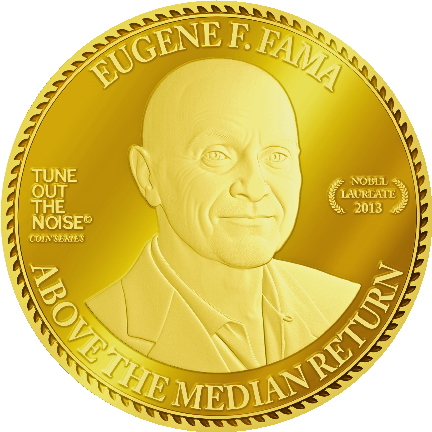
















 Home
Home 888-643-3133
 Contact Us
 Newsletter Subscribe
 eMoney
 IFA Apps
 Index Funds Book on Kindle
 Index Funds Audiobook
 Careers
 Facebook
 X
X LinkedIn
 Instagram
 Youtube
 Terms
Terms Index Descriptions