
 Risk Capacity
 Wealth Management
 Outsourced CIO
 Retirement Plans
 Institutional
 Financial
  Open an Account
 IFA App

 Articles
 Charts
 Investor Education ▾
 Fund
Fund
 Store
Store

 Taxes
Taxes Back-testing Disclosures
 Glossary
 Form CRS
A Tenth of All You Earn
 The most famous articulation of the savings principle comes dressed in ancient robes. In The Richest Man in Babylon, George S. Clason's 1926 collection of parables set in the world's first great commercial city, the wealthy Arkad reveals his foundational rule: "A part of all you earn is yours to keep. It should be not less than a tenth." Pay yourself first, before the sandal-maker and the wine merchant get their share, and let that tenth be put to work earning more.
Clason wrote fiction, but the setting was apt. Babylon was a civilization of lenders, borrowers, and recorded interest rates — a place where the mathematics of compounding was already understood four thousand years ago. The ten percent rule endures not because it is precisely optimal, but because it is memorable, actionable, and directionally right. It converts an abstract virtue into a standing order.
Franklin's Thrift
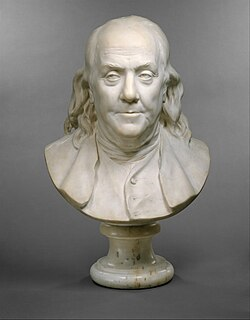 Eighteen centuries of moral philosophy later, the American apostle of saving arrived in the person of Benjamin Franklin. Through Poor Richard's Almanack and The Way to Wealth, Franklin made thrift a civic virtue: "A penny saved is two pence clear" — popularly remembered as "a penny saved is a penny earned." Franklin, too, urged his readers toward setting aside roughly a tenth of their income, and he understood what he called the astonishing power of compound interest, famously bequeathing modest sums to Boston and Philadelphia that grew for two hundred years into millions.
Franklin's contribution was to fuse saving with self-determination. In his telling, thrift was not deprivation; it was the purchase of future freedom, one deferred indulgence at a time.
The Economist's Fork in the Road
Classical and neoclassical economics later gave the old wisdom a formal skeleton. Every dollar of income, the economists observed, faces a fork in the road: consumption or saving. Consumption delivers utility now; saving is simply consumption deferred — a transfer of purchasing power from your present self to your future self, ideally with interest as compensation for the wait.
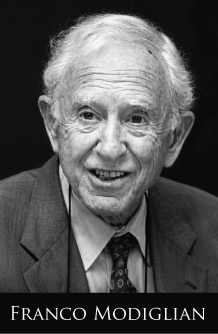
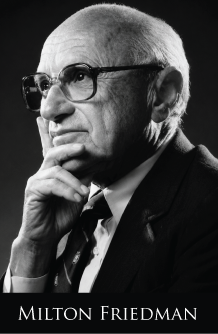
In the twentieth century, Franco Modigliani's life-cycle hypothesis and Milton Friedman's permanent income hypothesis made the logic explicit. Rational people, they argued, should smooth consumption across a lifetime: borrow when young, save aggressively through the peak earning years, then draw down in old age. Earnings arrive as a hump; spending needs arrive as a long plateau. Saving is the bridge between the two shapes. Modigliani won a Nobel Prize for the insight, but Arkad of Babylon would have recognized it instantly.
Retirement Readiness and the Automatic Default
Theory, however, collided with human nature. Left to their own devices, workers saved too little and too late. The great policy innovation of the modern era was to stop relying on willpower altogether. The 401(k), born of a 1978 tax-code provision, moved saving to the point of payroll — and behavioral economists Richard Thaler and Shlomo Benartzi showed that the real breakthrough was the default. With automatic enrollment and automatic escalation, blessed by the Pension Protection Act of 2006, inertia was converted from the enemy of saving into its most powerful ally. Participation rates in many auto-enrollment plans have been reported to exceed ninety percent. Babylon's tenth had become a payroll deduction.
Retirement readiness, as the modern literature defines it, depends on two levers: how much you save, and how those savings are invested. The first is behavioral; the second is where decades of evidence — including research such as Eugene Fama's efficient markets work and studies showing many active managers have not consistently beaten their benchmarks — suggest capturing market returns through low-cost, globally diversified index funds, held at a risk level that may be matched to an investor's capacity rather than short-term sentiment.
When Human Capital Runs Out
Why does all of this matter so much? Because most working lives are supported by an asset that generally declines over time: human capital — the present value of all the paychecks you have yet to earn. In youth it is enormous, dwarfing any brokerage account. But it is also a wasting asset. With every passing year, fewer earning years remain, and eventually the market for one's labor closes, often sooner than planned. Employers grow unwilling to hire and pay at prior levels, health intervenes, or the profession itself moves on. Age, more than any other factor, writes the final chapter of human capital.
At that point, financial capital typically becomes a primary source of support as wages decline or stop. And the job is a long one. A couple retiring at sixty-five faces meaningful odds that at least one spouse lives past ninety-five — a retirement that can stretch thirty years, longer than many careers. Thirty years of groceries, property taxes, travel, and medical care — plus mortgage payments or rent for many — and thirty years of a house and a car that keep aging alongside their owner. The roof will likely need replacing, the windows upgrading, the exterior repainting more than once; the automobile will demand repairs and, eventually, a successor or two. Then come the larger contingencies: healthcare needs that insurance does not cover, a possible rehabilitation stay for a family member in need, a house expansion or remodel — or a new house altogether. And late in the journey often comes the largest expense of all: long-term care, whether at home, in a retirement community, or in a nursing facility. Funding it all requires inflation-adjusted withdrawals for thirty years — and at a 3% inflation rate, the withdrawal in year thirty must be roughly two and a half times the initial one just to buy the same basket of goods.
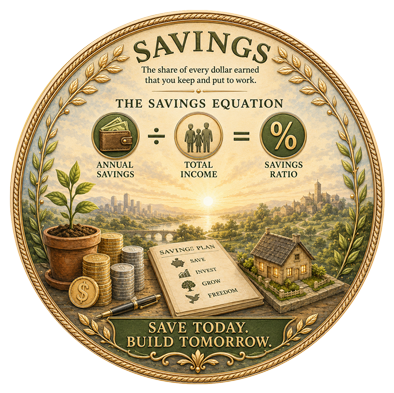
Seen this way, the entire four-thousand-year arc of the savings idea resolves into a single transaction: the systematic conversion of human capital into financial capital, one paycheck at a time, so that the second asset is fully built before the first one expires. Arkad's tenth, Franklin's penny, Modigliani's life cycle, and the auto-enrolled 401(k) are all the same instruction in different dress — pay your future self first and consider investing the proceeds in a diversified portfolio at low cost, while maintaining a disciplined long-term approach. Workers who follow this approach may find, when paychecks stop, that their accumulated capital can help support future income needs.

Disclosures:


















 Home
Home 888-643-3133
 Contact Us
 Newsletter Subscribe
 eMoney
 IFA Apps
 Index Funds Book on Kindle
 Index Funds Audiobook
 Careers
 Facebook
 X
X LinkedIn
 Instagram
 Youtube
 Terms
Terms Index Descriptions