
 Risk Capacity
 Wealth Management
 Outsourced CIO
 Retirement Plans
 Institutional
 Financial
  Open an Account
 IFA App

 Articles
 Charts
 Investor Education ▾
 Fund
Fund
 Store
Store

 Taxes
Taxes Back-testing Disclosures
 Glossary
 Form CRS
The Man Who Measured Everything: The Bell Curve Machine
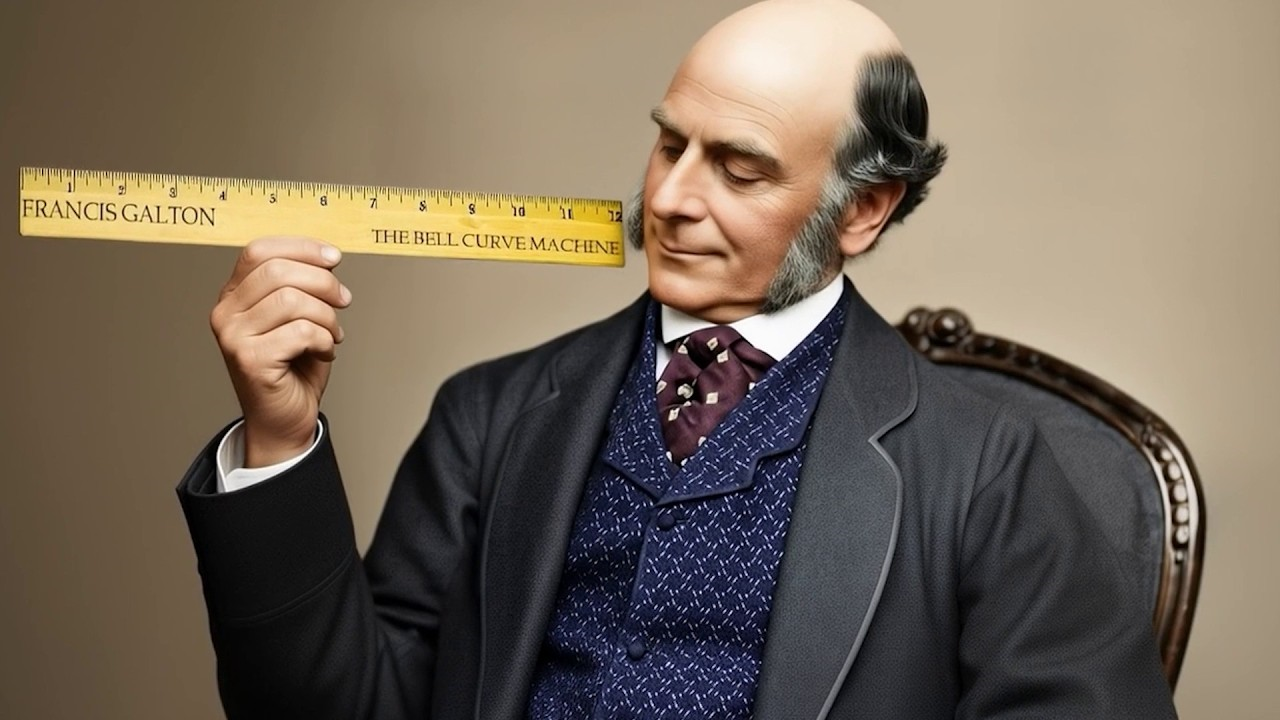

Francis Galton:
Randomness is not the same as disorder. Allow Subhra to demonstrate.
Subhadra Das:
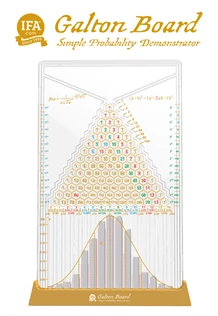
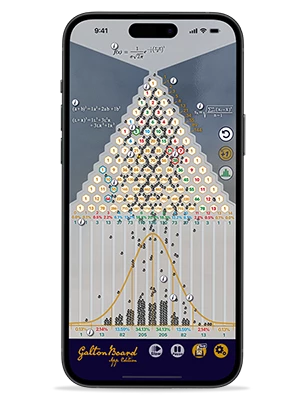
So we were talking about Galton's quincunx, which is a device that was designed to demonstrate the normal distribution. So if we follow Galton's instructions, what you have to do is turn the device upside down.
And then, as you funnel it down, you'll see all the little ball bearings bounce up against the pins. And at the bottom, ideally, you should get the normal distribution. The way that it works is that because the ball bearings are funneled into this triangular pattern of pins, which themselves are in this interlaced diamond pattern.
That's why I named it a quincunx — because of that pattern.
For every single one of the balls, whenever it hits one of the pins, it's got a 50/50 chance of going one way or the other. What the device demonstrates is that the odds of one of the ball bearings hitting pins and constantly going to the right, for example, is considerably less than the odds of it traveling and coming into the middle. This bell-shaped curve became rather iconic when a Belgian statistician called Adolphe Quetelet observed that if you measured for an individual trait within a population, you always got the bell-shaped curve. For reasons known only unto him, he took the chest measurements of 500 Scottish soldiers. And when you put those into a bar graph, you'll find you get the normal distribution.
Francis Galton:
The pattern never fails. And I find this reassuring.
DISCLOSURES:
This video is for educational and informational purposes only. It uses the Galton Board as a conceptual statistical illustration of how random outcomes can cluster around a mean. It is not intended to depict actual or hypothetical investment performance, the behavior of any index, or the results of any investment strategy.
This content should not be considered a solicitation, recommendation, or endorsement of any particular security, product, service, or investment strategy, and should not be construed as personalized investment, tax, or legal advice. All investing involves risk, including possible loss of principal. Past performance, model demonstrations, statistical analogies, or historical data do not guarantee future results, and no investment decision should be made solely based on this video or related materials.









 Home
Home 888-643-3133
 Contact Us
 Newsletter Subscribe
 eMoney
 IFA Apps
 Index Funds Book on Kindle
 Index Funds Audiobook
 Careers
 Facebook
 X
X LinkedIn
 Instagram
 Youtube
 Terms
Terms Index Descriptions