A new book by a Harvard professor and an Imperial College economist, praised by prominent economists, explains why the investment industry profits from your confusion. Its conclusions should concern every investor with significant assets at stake.
Before the FDA existed, America's medicine market was a free-for-all. Legitimate pharmacists and outright charlatans competed on the same shelves. Tobacco companies ran ads featuring doctors in white coats. Patent medicines laced with cocaine or alcohol sat next to genuine remedies, and the market made no distinction between them. If customers wanted it, somebody sold it, whether it healed them or killed them.
That history might sound distant. It isn't.
In Fixed: Why Personal Finance Is Broken and How to Make It Work for Everyone (Princeton University Press, 2025), Harvard economist John Y. Campbell and Imperial College London's Tarun Ramadorai argue that today's financial system operates on the same basic logic as that unregulated medicine market. The financial system, they write, "supplies too many products with exaggerated benefits and too few products with underappreciated benefits." It doesn't distinguish between informed demand and confused demand. It meets both with equal enthusiasm.
This isn't a fringe claim. Fixed was named a Financial Times "Best Book of the Year (2025)". Ben Bernanke, former Fed Chair and Nobel laureate, called the book "a deep and insightful discussion of what is wrong with contemporary consumer finance." Robert Shiller praised its central argument.
And that argument builds on a concept Shiller helped develop. In their 2015 book Phishing for Phools, Nobel Prize winners George Akerlof and Shiller coined a term for what happens when profit-seeking businesses encounter confused customers: they exploit the confusion. Not because they're villains. Because that's what competitive incentives produce. Campbell and Ramadorai pick up that thread and pull it tight. The problem isn't bad actors in an otherwise good system. The problem is that normal market forces, left unchecked, generate harmful products as reliably as they generate useful ones.
The demand exists. The supply follows. And millions of American investors are on the wrong end of it.
The Iron Law That Most Investors Never Learn
Here's a piece of arithmetic that should be carved above the entrance to every brokerage in America. The average dollar invested by all players combined earns exactly the return of the market. Not approximately. Exactly. So every dollar one active investor gains above that average, another active investor must lose. Before costs. Before taxes. Before anyone clips a single ticket.
Campbell calls this "the iron law of active investing." It isn't a theory or a philosophical position. It's simple subtraction.
The idea will be familiar to anyone who's read William Sharpe's landmark 1991 paper, The Arithmetic of Active Management. Sharpe, a Nobel laureate, laid out the same zero-sum logic more than three decades ago. Campbell builds on Sharpe's foundation, and the fact that a former president of the American Finance Association still needs to spell this out in a major book in 2025 tells you something about how stubbornly the lesson refuses to stick.
Why doesn't it stick? Partly because our brains are wired to reject it. Campbell and Ramadorai invoke the Lake Wobegon effect, the deeply human tendency to believe we're above average. Most drivers think they're better than most drivers. Most investors think the zero-sum math applies to the other guy.
The book describes a study of Indian investors who were randomly allocated shares in IPOs. Some got lucky, some didn't — the allocation was pure chance. But investors who received winning stocks overwhelmingly concluded they had genuine skill, and went on to trade more aggressively. Random luck, misread as personal talent.
That dynamic plays out every day in American markets. A lucky run on a hot stock becomes a story about conviction and insight. Meme-stock trading, as Campbell and Ramadorai note, "can be fun, but it is unprofitable for the average member of the crowd." The crowd, in aggregate, can't beat itself.
None of this requires cynicism about markets or contempt for the people trying to beat them. It requires only the willingness to take the arithmetic seriously. Most investors never do.
Why Even Skilled Managers Can't Help You
Let's grant the most generous possible assumption. Some fund managers genuinely can pick stocks. Campbell and Ramadorai concede the point directly: "there is evidence that some retail mutual funds have managers who can pick stocks that outperform a market index."
So why doesn't that help you?
Because skill is expensive, and your money isn't. Campbell states the economics bluntly: "Asset management skill is a scarce resource that commands a high price (it is rewarded by a high fee), whereas an individual with a little money to invest does not offer anything scarce to the marketplace and therefore should not expect to earn a reward for providing assets to an active manager."
Read that again. The skilled manager has something rare. You, the investor, don't. Dollars are flowing to a table already overflowing with them, and the price of access to that skill, the management fee, gets set at precisely the level that captures the manager's extra performance. Campbell and Ramadorai state it plainly: "even the best of these managers, who work for large mutual fund companies that sell directly to the public, charge asset management fees that equal the average extra performance they deliver, leaving nothing additional for retail investors."
The skill exists. The benefit doesn't reach you. The house takes it.
Warren Buffett put it more memorably in his 2017 letter to Berkshire Hathaway shareholders: "Performance comes, performance goes. Fees never falter."
This isn't the familiar "fees are bad" lecture. It's a deeper economic argument about who captures the value of talent. Even when a manager beats the market, the investor's net return after fees looks remarkably like the market return they could have had for almost nothing. The skill premium flows to the person with the skill, not the person writing the check.
And yet investors keep hunting for that edge, guided partly by tools that point them in the wrong direction. Campbell and Ramadorai note that Morningstar ratings place too much weight on past performance, which has little predictive power for future results, and too little weight on the one factor that reliably predicts investor outcomes: fees.
The scarce resource wins. It always does.
"They Have Not Your Interests at Heart"
In the musical Hamilton, the loyalist Samuel Seabury sings a warning to Americans contemplating revolution: "They have not your interests at heart!" Campbell and Ramadorai borrow the line but aim it at a different establishment entirely. Their target is the financial advice industry.
The conflict is structural, not personal. Stockbrokers receive commissions for selling active mutual funds and recommend them, as the book puts it, "despite their high fees and poor performance." The broker's income depends on what they sell, not on what works. And the products that pay the highest commissions are rarely the ones that serve clients best.
This might sound like an edge case, a handful of rogue employees in a system that otherwise works. It isn't. Consider Wells Fargo, which Campbell and Ramadorai cite as a stark example. Employees opened over a million checking and savings accounts and hundreds of thousands of credit card accounts without customer authorization. Management applied relentless cross-selling pressure, and the system rewarded volume over integrity. The scandal wasn't a malfunction. It was the machine working exactly as designed.
Academic research backs up the pattern. Studies show that advisors "often recommend one-size-fits-all portfolios that are more expensive than index funds but perform no better." The advice sounds personalized. The portfolio isn't.
The problem isn't uniquely American, either. Campbell and Ramadorai cite a 2010 European Commission report finding that over 40% of Europeans who purchased retail financial products had no idea their salespeople received compensation for recommending specific products. If the pattern holds across developed economies, the US is no exception.

The damage isn't evenly distributed. Campbell and Ramadorai describe it as a "reverse Robin Hood maneuver that worsens inequality," transferring wealth from less sophisticated customers to the firms that serve them. Less educated or lower-income investors, the book notes, feel "shame and embarrassment" asking questions about what they're being sold, a vulnerability that "unscrupulous salespeople know how to exploit."
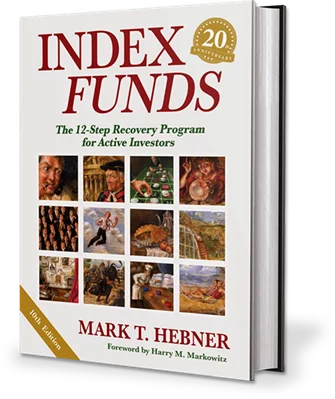
Mark Hebner, founder of Index Fund Advisors and author of Index Funds: The 12-Step Recovery Program for Active Investors, learned this from the inside. "I learned too late that brokerage firms did not get rich by enhancing their clients' wealth," he writes, "but rather (and ironically) by depleting it, transferring it slowly to their pockets in the form of commissions and margin interest that were in no way justified by the below-benchmark returns."
Hebner sat inside that machine, watched it operate, and built something different.
Most of these advisors aren't acting in bad faith. They're salespeople operating inside a compensation system that rewards them for selling. And the people paying the price, literally, are the investors who trust them.
What the Evidence Actually Says You Should Do
The diagnosis is uncomfortable. The prescription is not.
Campbell and Ramadorai describe index funds as "the most suitable investments for small investors." That's two leading economists, Harvard and Imperial College London, arriving at a conclusion through rigorous analysis of how financial markets actually operate. And millions of Americans are already acting on it. The book notes that between 2012 and 2022, index funds grew from 22% to 46% of total assets across all US mutual funds and ETFs. The shift has been significant.
But owning the right investments is only half the problem. Investors also need advice that isn't compromised by the compensation structures Campbell and Ramadorai spend so much of their book exposing.
That's where the fiduciary standard matters. A Registered Investment Advisor, an RIA, is legally required by the SEC to act in the client's interest. Not "suitable" products. Not "appropriate" recommendations. The client's actual interest, full stop. An RIA is typically compensated by fees rather than product; the incentive alignment can be stronger under that model.
Mark Hebner describes this kind of advisor as "our fiduciary and guide through the peaks and valleys of the market, away from the temptations of speculation and toward a tranquil way of investing." A relationship built on alignment, not conflict.
Campbell and Ramadorai go further, proposing systemic reforms: mandatory index fund options in retirement plans, fee caps on certain products. Those are policy debates worth having. But no one needs to wait for Washington to act.
Four steps, starting today:
- Ask your advisor one question: "Are you a fiduciary?" If the answer isn't an unqualified yes, if it's hedged, qualified, or redirected, that may tell you what you need to know.
- Request a complete fee breakdown, not just the headline management charge, but all costs across every product you hold.
- Review your portfolio's composition. What percentage sits in index funds versus actively managed products? The gap between those two numbers is worth understanding.
- Read Fixed. Campbell and Ramadorai wrote it for intelligent general readers, not academics. It's one of the clearest explanations yet of why the system works the way it does, and what you can do about it.
The financial system won't fix itself. But your corner of it? You can take meaningful steps to improve it.
The Cure Is Already on the Shelf
A century ago, societies looked at the patent medicine market and reached a simple conclusion: competition alone couldn't protect people's health. Regulation followed. Campbell and Ramadorai argue the financial system has reached a similar turning point, with competitive markets supplying harmful products alongside beneficial ones and consumers unable to tell the difference.
But here's what separates finance from those old medicine shelves: the cure already exists. Fiduciary advice, transparent fees, evidence-based investing. None of this requires an act of Congress. The system may be fixed against you. Your response doesn't have to wait for anyone's permission.
Resources
Akerlof, G. A. & Shiller, R. J. (2015). Phishing for Phools: The Economics of Manipulation and Deception. Princeton University Press.
Campbell, J. Y. & Ramadorai, T. (2025). Fixed: Why Personal Finance Is Broken and How to Make It Work for Everyone. Princeton University Press.
Hebner, M. T. (2025). Index Funds: The 12-Step Recovery Program for Active Investors. IFA Publishing.
Sharpe, W. F. (1991). The arithmetic of active management. Financial Analysts Journal, 47(1), 7–9.
ROBIN POWELL is the Creative Director at Index Fund Advisors (IFA). He is also a financial journalist and the Editor of The Evidence-Based Investor. This article reflects IFA's investment philosophy and is intended for informational purposes only.
DISCLOSURES:
This article is for informational purposes only and does not constitute investment advice, an offer, or a solicitation to buy or sell any security. Past performance is not indicative of future results. All examples and data cited are based on historical analysis and may not reflect future market conditions. Investing involves risks, including the possible loss of principal. The mathematical principles discussed illustrate theoretical concepts and should not be interpreted as guarantees of investment outcomes. Any third‑party statements or awards referenced relate to the cited books/authors and are not endorsements of Index Fund Advisors, Inc. or its advisory services, and no compensation was provided by Index Fund Advisors, Inc. in connection with them
Readers should consult a qualified professional regarding their personal situation.
This article was sourced and prepared with the assistance of artificial intelligence (AI) technology.
For more information about Index Fund Advisors, Inc, please review our brochure at https://www.adviserinfo.sec.gov/ or visit www.ifa.com.